

Healthcare sector
The Electronic Archiving System (EAS) in the healthcare sector enables the secure and probative preservation of medical records and health data, while ensuring their confidentiality and integrity. Essential solution for healthcare facilities, it meets the strict requirements of the medical sector regarding security and retention periods.
Specific needs of the sector
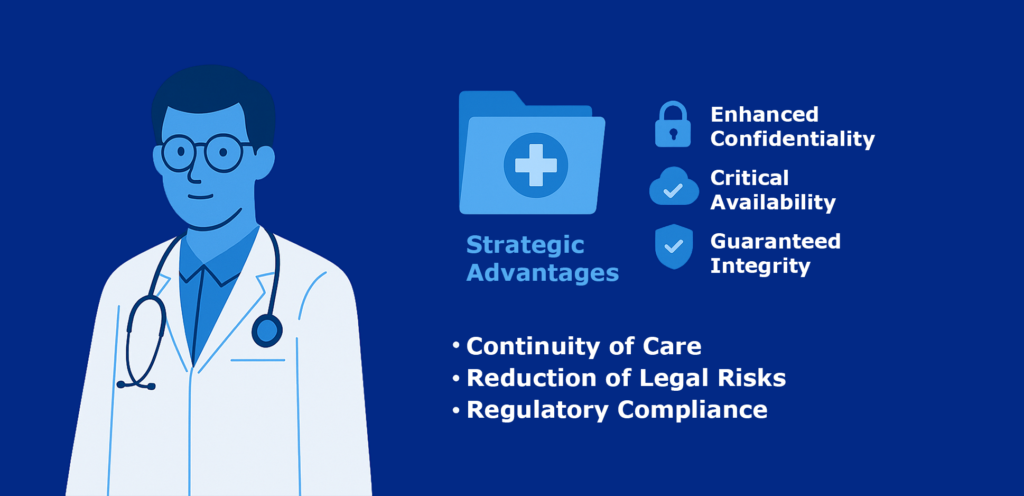
Enhanced confidentiality: Protection of sensitive data covered by medical secrecy;
Critical availability: Rapid access to medical information for emergency care;
Long retention periods: Preservation of certain records for several decades;
Comprehensive traceability: Complete history of access and modifications for each document;
Interoperability: Compatibility with health information systems and the DMP;
Guaranteed integrity: Preservation of medical data accuracy over time;
Specific certification: Compliance with Health Data Hosting (HDS) requirements.
Strategic advantages
Continuity of care assured through permanent access to medical history;
Reduction of legal risks related to loss or alteration of medical information;
Optimization of hospital space dedicated to physical archives;
Improved collaboration between healthcare professionals;
Strengthened security of sensitive patient data;
Significant time savings in searching and consulting records;
Simplified regulatory compliance during health authority inspections.
Documents concerned and retentions periods
Technical and normative requirements
Compliance with HDS certification (Health Data Host);
Compliance with standards: NF Z42-013, ISO 14641 and NF 461 certification;
Highly secure infrastructure with data redundancy;
End-to-end encryption of health data;
Strong authentication for healthcare professionals (HPC);
Qualified timestamping of actions on documents;
Format sustainability to ensure long-term readability;
High availability (24/7) for medical emergencies.
Legal and regulatory aspects
Strict compliance with GDPR and specific health data provisions;
Compliance with the Public Health Code regarding medical record retention;
Application of CNIL recommendations on health data security (French Data Protection Authority);
Compliance with ANS security standards (French Digital Health Agency);
Compliance with the March 4, 2002 law on patient rights;
Respect for medical secrecy in all archiving operations.
Practical recommendations
Conduct specific risk analysis before deployment;
Train healthcare staff in EASusage;
Implement strict authorization policy by user profile;
Define tailored archiving workflows for different medical services;
Plan degraded procedures in case of system unavailability;
Automate EAS feeding from electronic patient records;
Schedule regular security audits to ensure data protection.